The Verdict - The Lombardi Law Firm Blog
Here at the Lombardi Law Firm we add blog content that is personal to those involved in accidents. We write this way so you have an understanding of how we think and handle cases - your case. We invite you to call us if you think we can help you resolve your legal problems. We settle most of our cases, because we do the basic legal work necessary to understand the facts of your case. We offer on our website, relevant and concise information that you will be helpful to you as you get ready to settle or to try your case.
We can and will do the same for you. That's my promise. So call us today!
Steve Lombardi, 515-222-1110 or sdlombardi@aol.com
Comments (0)
Torts 101: The 4th Element of a Personal Injury Case
Finding foreign objects in food is a pretty common occurrence. It's one of the most difficult cases to prove because there have been people who put things into their own food and falsely claim it came that way. The story about finding a rat in a Coke bottle comes to mind.Comments (0)
What is the calculation formula for pain and suffering on a homeowners claim?
It takes years of experience to know how to value soft damages otherwise known as pain, suffering and emotional distress. It takes years to be able to know when enough is enough and to pull the trigger on accepting the terms of settlement being offered.Comments (0)
Just falling isn't enough to make the landlord liable
The cause may be more apparent if you tripped and fell or if you slipped and fell. Those are two very different cases because the causes can be very different.Comments (0)
Torts 101: Damages is a necessary element in any personal injury claim
Foreign objects found in food will always be confiscated. They do it so you can’t prove your claim. For the cost of a meal they settled your claim.If justice isn’t about fairness, then who’s running the asylum?
How can a young girl’s life be worth nothing and a poached deer carcass is worth $20,000? Iowa law assumes life, all lives, have a minimum value of $150,000.The Emotional Rollercoaster of a Wedding Day House Fire
What a mess for your wedding day. These laptop battery fires are an interesting phenomenon, and aren’t all that uncommon.What is my case worth, after back surgery from being injured when a chair broke?
Have you ever had a claim involving a ruptured disc cause when the chair broke? Yes, it settled for $175,000 and was a workers' compensation case.House fire causes man's death in Sioux City, Iowa
There is no conclusion as to the cause and origin of a fire that broke out in Sioux City, Iowa and that resulted in one man’s death.Who first crossed the center line?
What if you don’t believe the conclusions the police make in their accident investigation report? Well, then you have to hire a lawyer (contingent fee based).The Lown Personal Injury Lawsuit Raises Larger Questions
Lown death raises questions, why were criminal charges not filed and is there a punitive damage claim being asserted? Coolings now have a race to judgement.Leaving the scene of an accident and Iowa's drunk driver
What lawyer can help me prove who was driving the car that struck my family? If the driver leaves the scene what can I do? sdlombardi@aol.comSUV Rollovers In Iowa
If you’re involved in an Iowa rollover personal injury accident you need to read the information on the Lombardi Law Firm website. www.lombardilaw.com.Personal Injury News, from around Iowa
In Burlington, Iowa a corn snake called Naja has died after living 45 years. Naja was kept in a science class at Horace Mann Middle School. The science teacher, Joe Desy wrote an obituary for Naja and noted that it, he or she, you pick, lived in the classroom from 1972 until 2002 when the teacher retired. The Register noted, "Desy wrote in an obituary that Naja's early years were spent ridding Iowa farmlands of small rodents. At about the age of 8, the snake came to the school and was "resident reptile and teacher of all things good and true about snakes."
In Fairbanks, Iowa there was a fire on October 7th that caused a property loss at a manufacturing business. The investigation concluded that a 4-year-old boy playing with a "small torch" had been in a storage area getting firewood when the fire began.
And in Atlantic, Iowa a combine caught fire and a 59-year-old man, Mark Brown died. There are few details about how the fire started, why Mr. Brown wasn't able to get away or whether there was a malfunction of the engine. For those of you who don't know what a combine is, it's a large piece of farm machinery, which is driven in the fields and harvests corn, cotton and soybeans. Combines are extremely expensive pieces of machinery costing well over $100,000 to probably over $250,000. If you're interested in more you can visit John Deere University online. Having grown up in Rhode Island I have always been fascinated with farm machinery. I've never been able to figure out how to make money at it, but it's a fascinating profession.
Apparently an angry mom fed hot tortillas to her son and has now been charged with child endangerment. The things we do for love.
Accurate Reporting, Identity Theft and Brotherly Love
Do you think identity theft occurs only by random people sifting through your trash looking for personal information they can steal? Many people wonder how far to go in protecting their personal information. Should you trust your friends and relatives?
Here is a news report with a twist to using someone else's identity. On September 28th 2009 Bernard Marrero returned home from his honeymoon only to be arrested for a DUI; his brother Samuel Marrero was the re-gifter of this late wedding gift. Police are staying that his brother, Samuel Marrero gave them his name, social security number and birthday when Sam was pulled over. The question remains as to how he was able to get away with it and what if any action can be taken by Bernard to remedy the lost time and embarrassment caused by this incident. It makes me wonder, is it really so easy to fool the police and for the wrong man to be arrested? Did he have an ID? Do these brothers really look so much alike? Were the police in a rush? Are the facts in the story accurate? Was Sam taken to the police station, booked, fingerprinted and whatever was in his pockets taken and examined? Or was he allowed to walk away from the stop? What is the real story? What are the real facts?
From a lawyer's point of view I have to wonder if this would amount to identity theft. Identity theft is a crime under Iowa law; it also provides a basis for a civil cause of action against the person or company pilfering your identity. It sure seems like it would be identity theft. What do you think?
Passing at the crest of a hill can be a negligent act that makes you liable.
On June 12th, 2009 Donald Wallace was eastbound on Highway 34 in a Dodge Caravan when witnesses reported that he had stopped in the road just over the crest of a hill, Zachary Burch was also traveling Eastbound in his Jeep and rear-ended the van driven by Mr. Wallace. The accident resulted in the death of Shirley Wallace and the hospitalization of Mr. Burch and Mr. Wallace. The crash remains under investigation and charges are pending. The accident occurred in Henry County, Iowa.
I’ve posted on this before concerning stopping over the crest of a hill. Doing so can certainly be considered negligent conduct. Of course if you have no choice then you’d better get back to the crest of the hill to warn oncoming cars and trucks and motorcycles.
Negligence can be attempting to pass at the cress of a hill. InjuryBoard, Lombardi, April 10, 2009.
WITH TORT DAMAGES REFORMED WHO WINS AND WHO LOSES?
Today is the end of May 2009 and I thought it appropriate to end Tort Reform month by focusing on the winners and losers when society artificially limits tort damages with caps. It’s been fun this month writing about a topic that strikes so many as emotional. I’ve tried to analyze medical tort reforms from an economic view. I’ve probably succeeded in some respects and in other respects failed miserably. But like always our theme at Lombardi Law Firm has been to tell you what you need to know not necessarily what you want to hear. If you’ve enjoyed it or even if you’ve disagreed with my conclusions, let us know. Drop us a line or a telephone call; I take them from all over the country. I hope the patients and the doctors are better prepared for the road ahead. I wish you both the best of luck. Now, back to the winners and the losers of medical tort reform.
WINNER - Doctors who make the biggest medical mistakes – They get the most from capping the patients’ ability to recover compensatory damages, either economic or non-economic, after a medical mistake. They pay lower malpractice premiums (even though they make the worst mistakes) and by doing so get to take home more income. Their lifestyles will not be affected, but if they are affected, it will be towards improvement economically and socially. The general public will not be made aware of the medical mistakes these doctors cause, because their will be fewer lawsuits that make those mistakes public. Also bolstered by their success at hiding mistakes information will become more difficult to find. They control what goes into paper medical records that have no time or date stamp; a trail for detecting changes; and these doctors will get away with more and more medical mistakes. Patients who suffer the consequences will not have their day in court thus allowing the medical community to continue to sweep evidence of mistakes under the rug.
WINNER - Medical Malpractice Insurance Companies – Insurance companies have a win-win situation because they still get to collect premiums from those doctors making the worst mistakes and with each of those loss events, the losses will be kept artificially low. These insurers get their cake and eat it too. They are clear winners.
WINNER - Politicians – The politicians win because with capping damages they’ve created a steady stream of corporations and individuals willing to annually contribute to their campaigns. Those for and those against laws that artificially cap medical damage mistakes, will contribute to their next campaign effort on an annual basis. Patients, who for the most part haven’t yet understood what this law means economically to them, will not demand political accountability. At least at this point the politicians are clear winners.
LOSER - Health Insurance – With artificial damage caps these companies lose out all the way around. Patients injured by a medical mistake will file all medical expenses with their health insurance. Due to artificial caps on recovery lawyers will take fewer and fewer cases that would have resulted in subrogation recovery from liability insurance carriers. If there is no medical malpractice claim brought or with limited recovery available it is not likely health insurers will be able to recover any medical expense paid for that care made necessary by medical errors. After the initial care the health insurers will continue to lose out by increased payouts on future medical care. With medical malpractice claims being as imperfect as they are, patients even with an award will run out of money and health insurers will to some extent be forced to pick up the tab for medical claims.
TEMPORARY WINNER/LOSER - Hospital Systems – They win and they lose. They win with paying lower malpractice premiums, for the doctors they employ, but then hand it right back with picking up the bill through lower reimbursement rates from Medicare and Medicaid government programs. Patients that run out of money will soon file for coverage under these governmental programs. Those that continue to have health insurance will increase the burden on health insurance carriers that will in turn negotiate lower and lower reimbursement rates with hospital systems.
BIG LOSER - The United States Government – A clear loser under capped damage laws. While mistake ridden doctors will continue to practice paying high income taxes; the citizen patients who are injured will end up on Medicare and Medicaid programs along with the Social Security Disability program thereby increasing the payouts and pinching an already shrinking federal budget that is being consumed by entitlement programs.
BIGGER LOSER - States, counties, cities and towns that provide medical care for the poor and uninsured – Clear losers under capped damage laws. When patients run out of cash from lower awards or they are without awards because lawyers refuse to take their cases, state and county hospitals will treat more and more no-pay patients. Many will end up institutionalized in government institutions. This will increase the demands for paying more medical expenses of the needy on an already straining budget.
ANOTHER BIG LOSER - The Taxpayers – Taxpayers clearly lose. They get to pay higher and higher taxes for the cost of the biggest and worst medical mistakes. The cost of medical mistakes is not being eliminated; that cost is simply being shifted from those that made the mistakes to the tax payers. As demands increase on government entities to provide for the poor patients who never recovered or had reduced recovery through litigation, the economic burden will increase. Taxes to pay for these programs will have to increase. As patients the taxpayer gets a double bill. See immediately below.
BIGGEST LOSER - The Patients – Are the biggest losers under capped damage laws. As a patient they have little information to make an informed decision about which doctors and hospital systems put them at the greatest risk of a medical mistake. Without economic pressure being put on those doctors and hospitals that make the biggest mistakes systematic changes will not take place thereby increasing the number and severity of medical mistakes. In other words you’ll get more severe medical mistakes with greater and greater risks to patients who can ill afford the costs being shifted to them.
Can the patients look to the legal system for help? No. Patients lose again with the legal system that will not be able to take on the patients’ medical mistake cases due to risk-benefit economic analysis. In other words the limited recovery will not make the case economically feasible to pursue. Lawyers who have developed expertise in this area will practice another area of the law, making those lawyers willing to take such cases harder and harder to find. This will force higher contingent fee percentages; a simple supply and demand economic issue. When you do find a lawyer you may still not find satisfaction. Lawyers and law firms will not advance thousands of dollars in litigation expenses when the recovery is artificially pre-capped. Those cases that are taken will see a higher contingent fee percentage to compensate for high litigation costs and the risk of taking on tough liability cases with lower damage (recovery) rewards and to offset those cases that produced little or no recovery. This problem will not be readily apparent, but as the legal market adjusts the problem will become clear after you, the patient suffer the consequences of a medical mistake. The problem is the patient (and taxpayer) will be the last to know and will have the hardest time changing the system to force doctors to pay for their own mistakes.
When faced with hospitalization or the need for immediate medical attention, including surgery, the patient gets little information. What it there is difficult to search and when a major medical mistake occurs they have little chance of recovering compensatory damages sufficient to pay those that line up at the recovery end. After a limited recovery, those asking for payment or reimbursement will include the insurance companies enforcing subrogation clauses, medical service providers with unpaid or uncovered medical expenses, the litigation expenses and the lawyer with his contingent fee. Whatever money is left over after the recovery pays the aforementioned will soon go to future medical expenses and living expenses. The awards will be inadequate for any long term planning; a fact quickly realized by the patients and their families. These patients will have few choices but to go on government medical and disability programs. For the most part they will be forced to divorce and the children to work instead of attending colleges and universities. For most of them life will be a spiraling downward economic cycle towards the poverty line. They will find insurance companies of all kinds (life, medical, disability, etc.) unwilling to insure them leaving them no choice for what the government offers them. Employers viewing them as a medical expense that can’t be controlled will find excuses not to hire them. At that point they will begin to fully appreciate the nature of how artificially capping damages has affected them.
THE SYSTEM REMAINS BROKEN, CAPS DO NOTHING TO FIX IT – GAMBLING THROUGH BLIND FAITH
The current medical system buries medical mistakes and the risks for contracting infections through laws that protect information secrecy. While doctors are disciplined for serious malfeasance, once the medical community determines the need for action they do not make that information ready available for patients to search and review. For instance Texas, like Iowa allows you to research one doctor at a time and then only to see information that has been made public. The patients are forced to search in all 50 state medical board web sites before knowing if the doctor they’ve chosen or intend to choose has a record of making mistakes. Patients have little time to do this kind of research and are forced to consent on blind faith. It’s impossible to go to one web site and search by a doctor’s name. With hospital systems it’s even more difficult to find any information about infection rates and employee mistakes. As an example, try to find out how many wrong-site surgeries have occurred in any one institution, hospital system or any one physician. Good luck, because you can’t.
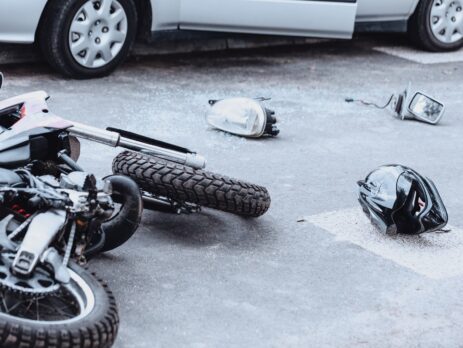
Motorcyclist killed by drunk driver in Spencer, Iowa.
Yesterday we discussed a drunken driving case where someone was killed and it led to the offending driver probably being deported. Today we see how the drunk driver may be affected. Driving while drunk can kill others and can lead to a long prison sentence. Think before you drive drunk.
J. Prather was charged with driving under the influence that resulted in someone else’s death. Brian Speck was driving a motorcycle that was slammed into by a car that Prather was driving. Prather was also charged with hit-and-run. Prather was sentenced to 25 years for vehicular homicide and another 5 years for causing injury by vehicle while intoxicated.
Apparently he was despondent enough to attempt suicide. He was discovered by police who found him unconscious in his home.
University of Iowa injury study is flawed; at least as it concerns TBI's and head injuries
A University of Iowa study examined data causing personal injury to Iowans between 2002 and 2006. Today we examine the findings regarding helmet versus not wearing a helmet while riding on a motorcycle. Those not wearing a helmet are 2.3 times more likely to suffer traumatic brain injury than riders with helmets. Average hospital charges were 1.5 times greater for those who were involved in an accident and not wearing a helmet.
The riders without helmets suffered more severe injuries. Eleven percent suffered moderate traumatic brain injury as opposed to six percent for those wearing a helmet. That is an increase of 1.8 percent greater TBI without a helmet.
Following a motorcycle crash the rider with a helmet can expect 17 out of every hundred to suffer a TBI. As contrasted with non-helmeted riders having 32 TBI’s out of every 100 accidents. That is a 1.9 times higher rate of TBI’s for those not wearing a helmet.
I’m critical of this study because TBI and head injury were not defined and there isn’t really a good way of measuring the extent of TBI. First what is a head injury and what is traumatic brain injury? All head injuries do not result in traumatic brain injury. In the case of motorcycle accidents and wrecks a head injury is simply injury to the head. A traumatic brain injury is trauma to the head that results in a brain injury. If I knocked your head with my hand you have suffered a head injury. But you don’t have traumatic brain injury. What criteria did they use would be important to know. Without this information the findings are not very useful.
This story is also covered by Radio Iowa.
How to insure your child's car while away at school without assuming liability for the driver's negligence
Often times I get questions asked online that should be added as blog posts. This is one of them.
Question:
Our son is a full-time college student in Washington, and he is about to purchase car insurance. He is still a resident of Iowa, where my wife and I live. Would it be wise for our son and me to buy the car together and tag and title it in Iowa so we can put him on our umbrella policy? Or should he just get his own and stay off his parents' policy? The question is this: we claim him as a dependent on our income tax returns and are co-signers on his student loans, so would we be liable in the event of a car accident? If so, would we be ahead to put him on our policy where we have a $1.4 million umbrella rather than have our son take out a minimum liability policy of his own in Washington?
Answer:
I think this is one of the wisest questions a parent can ask. I too asked it when my children were just learning to drive. Here is what I did. I purchased a car for them with the understanding they had to pay me back and to insure and maintain it. Rather than put my name on the title, because I didn’t want the liability exposure, I titled the car in their name and placed a lien on the title in my name. They signed a loan repayment agreement that included language giving me the right to repossess without notice if they failed to maintain insurance or place the collateral at risk. Placing the collateral at risk could include driving while under the influence of alcohol. I kept the extra set of keys.
Your situation may be a little different than mine. I own sizeable assets and didn’t want to place them at risk. You may not have that challenge and simply want to have a large insurance policy in place to protect the child. Remember placing a car in your name, makes you the owner and under Iowa law the owner is legally responsible for the permissive driver’s negligence, which may include drivers your son gives permission to operate the car or truck. I didn’t want that kind of exposure or hassle with trying to control who drives the car. With their being at school and away from home it’s tough for us to really know what is going on.
The umbrella insurance policy you have at $1.4 million may or may not be enough coverage. Here is what I mean by that. The umbrella policy may or may not include a provision to extend the underlying car insurance coverage for underinsured and uninsured motorist coverage. Read the policy and see if it does. I also write blogs on the Des Moines market for Injuryboard.com and on the Lombardi Law Firm website blog, The Verdict, and have covered this subject just recently on WJRN Talk Radio, Racine, Wisconsin. If you write to me I can provide the links. See if this works for you to listen.
File name: 02~25~08nmlomb.mp3:
Download link: http://www.mediafire.com/file/dytnxgt3gi9
And here is the InjuryBoard link:
Driver Safety: Starts before you turn the ignition key
Posted by Steve Lombardi | February 11, 2009 10:25 AM
The biggest road hazard you may face this and next year are uninsured motorists. If you didn’t have enough to worry about with double bottomed semi-truck trailers, pieces of retread tires and...
And the link to The Verdict article with the same title.
I hope this answers your questions, if not write to me again. Here is Iowa Code section 321.493 where I’ve underlined the important language.
321.493 Liability for damages.
1. a. Subject to paragraph "b", in all cases where damage is done by any motor vehicle by reason of negligence of the driver, and driven with the consent of the owner, the owner of the motor vehicle shall be liable for such damage. For purposes of this subsection, "owner" means the person to whom the certificate of title for the vehicle has been issued or assigned or to whom a manufacturer's or importer's certificate of origin for the vehicle has been delivered or assigned. However, if the vehicle is leased, "owner" means the person to whom the vehicle is leased, not the person to whom the certificate of title for the vehicle has been issued or assigned or to whom the manufacturer's or importer's certificate of origin for the vehicle has been delivered or assigned. For purposes of this subsection, "leased" means the transfer of the possession or right to possession of a vehicle to a lessee for a valuable consideration for a continuous period of twelve months or more, pursuant to a written agreement.
What is negligence? As a juror how do I analyze facts when negligence is the issue?
Today’s post is about negligence, what it is and how to view evidence to appreciate what is negligent behavior. Here is a headline and the opening line of a news story out of Indiana.
Snow causes crash and brief
closing of I-65 near Lowell
LOWELL | An early Saturday snowstorm is being blamed for a traffic accident that briefly closed a south Lake County section of Interstate 65 and left a downstate man injured.
For years I’ve read headlines and opening sentences in news stories with the lines blaming weather conditions for causing accidents. The idea that snow or weather or even slippery conditions can cause an accident is absolutely preposterous. There is snow outside in my driveway this morning and as I walk to the mailbox to retrieve the morning’s newspaper I notice that the driveway is slippery. The slippers I’m wearing don’t quite fit snuggly on my feet. (Acorn slippers) There is a car sitting in the driveway with snow on it and all around it. So far the snow hasn’t caused an accident. Why not? If snow causes accidents why hasn’t my car in the driveway had an accident? It’s been snowing all night and still there is no accident. The driveway is even slippery and so far no accident. I walked all the way down to the end of the driveway and back and still there is no accident. Maybe I should come back in an hour to see if there’s been an accident. What do you think will there be one? Will I come out to find the fenders crunched and wrecked car?
What’s necessary to have an accident? That’s the place where negligence starts. We need a driver or drivers. No driver and I dare say the car, snow and slippery driveway can coexist all day without having an “accident”.
Now let us turn the discussion to duty. As a juror sitting in a civil car accident case or as the judge will say, a tort case, there are four elements to be proven and then analyzed. The four elements are duty, a breach of duty, proximate cause and damages. Today we are looking at the first two elements, duty and breach of duty. Back to the snow.
As a lawyer with 28 plus years of experience trying civil lawsuits I am confident in saying snow has no duty not to be slippery or to avoid falling on the public highways. I am equally confident in my assertion that no judge would instruct a jury that any law required snow, not to be slippery or on the highway. That I am certain. Drivers on the other hand do have certain duties. A duty is a standard or rule of the road (a law or regulation) that driver must follow in using the public highways. Those duties can include restrictions on speed, when to pass, when not to pass, which side of the road each car should be driving, when to brake and when to make adjustments to the manner in which they drive. Adjustments are the key to this analysis. If it snows and the roadway is slippery the driver must slow down and operate the car or truck in a manner that allows the vehicle to be safely operated. It is the driver who has a duty not the snow. The slick conditions are just that; a condition which the driver must evaluate and adjust his or her driving habits to avoid colliding with other cars, trucks, people, signs, buildings, bridges, culverts and other fixed or moving objects. Drivers are what is needed in my driveway before there can be an accident and it’s those drivers that have the duty and can breach the duty. So when you’re sitting on a jury and someone says that it was the snow or other weather that caused the accident, explain to them how wrong they are and then sit back, hopefully you've wore that power tie or skirt, and see how quickly you’ll become the foreperson.
Here is the full report from Indiana about the snow having caused an accident. While it’s permissible with news reporters to write this way, it’s not proper for lawyers or jurors to think this way. People cause accidents, not weather or cars without drivers.
Snow causes crash and brief
closing of I-65 near Lowell
LOWELL | An early Saturday snowstorm is being blamed for a traffic accident that briefly closed a south Lake County section of Interstate 65 and left a downstate man injured.
Indiana State Police said Kevin Tomeo, 30, of Avon, In., west of Indianapolis, suffered head and internal injures. He was transported to St. Anthony Medical Center in Crown Point.
The National Weather Service said Saturday an overnight snow system deposited a half inch of snow across much of Northwest Indiana.
Police said an unidentified passenger car was southbound on I-65 shortly after 3 a.m. Saturday when it lost control on a patch of black ice that formed from snow melt at the 238 mile marker, two miles south of the Indiana 2 exit.
Police said the passenger car pulled out of the skid and continued unharmed, but Tomeo's Jeep Cherokee, which was traveling behind it, lost control when he attempted to brake to avoid a collision.
Police said the Jeep began spinning, hit the guard rail and bounced back onto the highway where it was hit by a 2003 Mack truck pulling a double trailer.
Police said the tractor trailer jackknifed, hit the guard rail on the right side of the pavement and came to a halt, blocking all southbound lanes of travel for two and a half hours.
Police said the tractor trailer driver, Roosevelt Bell, 28, of Park Forest, Ill., was uninjured, but ticketed for driving too fast for road conditions.
The National Weather Service said temperatures will remain in the low 30s, but no more snow is forecast until Tuesday.
Iowa Fire Deaths: Landlords, Tenants and Homeowners – Get your act together.
House and building fires in Iowa have killed 19 people since January 1, 2009. Four more people died just this past week. During all of 2008 there were just nine. In 2007 there were 30 and 2006 33 fire related deaths in the State of Iowa.
The Iowa Department of Public Safety has issued a public information release indicating the following:
|
Fire-Related Fatality Count Continues to Increase |
|
Des Moines, IOWA--- Since January 1, 2009, 19 people have died from injuries sustained in fires throughout Iowa. By this time last year, there were 9 fire related fatalities. The State Medical Examiner’s Office has determined that twenty-five year old Mackenzie Blandau and 22-month-old Luis Garcia both died of smoke inhalation in an apartment building fire in Hampton, Iowa on Saturday, February 14, 2009. Also on Saturday, February 14, 2009 firefighters responded to a fire in Dixon, Iowa where 55-year-old Dave Postell was rescued from his burning residence. After several days in the hospital, Postell died from injuries sustained in that fire. Additionally, the Scott County Medical Examiner has released the autopsy results of thirty-seven-year-old Beth Ann Bartosch of Davenport. Bartosch was found dead inside her burning home on Monday, February 16, 2009. Bartosch died of smoke inhalation. “The 19 people who’ve died this year, including the four most recent, were members of a community and I’m sure had families who loved them,” said Fire Marshal Jim Kenkel. “Start thinking about fire safety in your home, so you can save your community and your family from losing a loved one.” The fires in both Hampton and Dixon are being investigated by the Office of the State Fire Marshal and are currently listed as undetermined while the investigations continue. The fire in Davenport is being investigated by the Davenport Fire Department and has been determined arson. |
Folks, check your smoke detectors and make sure the batteries work. Every residential building in Iowa should have smoke detectors with an audible warning! It should beep.
If you don’t know the law and would like to read the Iowa Code it’s Chapter 210 Smoke Detectors.
Several years ago my clients died in a rental unit in which the smoke detector didn’t work. That case settled for a lot of money but the families were devastated. No amount of money could bring them back.
Landlords you have an obligation under Chapter 210 Smoke Detectors to install and keep them working. No excuses. Period. This is your duty under the law. Know this, that every one of those 19 people that died may have a cause of action for money damages against some rental company, management company or landlord. I haven’t reviewed each one but my point is there is potential in each instance. It’s been a long cold winter and economic times are tough, especially out in rural Iowa.
Tenants, if the detector doesn’t work, don’t wait for the Landlord to fix them. Fix them and under Iowa Code Chapter 562A the Uniform Residential Landlord and Tenant Act you can deduct the cost from your rent, so long as the responsibility for maintaining the apartment or house is the Landlords. Read 562A.21 Noncompliance by the landlord, become familiar with it and do what it requires. Here is the actual law.
562A.21 Noncompliance by the landlord--in general.
Except as provided in this chapter, if there is a material noncompliance by the landlord with the rental agreement or a noncompliance with section 562A.15 materially affecting health and safety, the tenant may elect to commence an action under this section and shall deliver a written notice to the landlord specifying the acts and omissions constituting the breach and that the rental agreement will terminate upon a date not less than seven days after receipt of the notice if the breach is not remedied in seven days, and the rental agreement shall terminate and the tenant shall surrender as provided in the notice subject to the following:
If the breach is remediable by repairs or the payment of damages or otherwise, and if the landlord adequately remedies the breach prior to the date specified in the notice, the rental agreement shall not terminate.
If substantially the same act or omission which constituted a prior noncompliance of which notice was given recurs within six months, the tenant may terminate the rental agreement upon at least seven days' written notice specifying the breach and the date of termination of the rental agreement unless the landlord has exercised due diligence and effort to remedy the breach which gave rise to the noncompliance.
The tenant may not terminate for a condition caused by the deliberate or negligent act or omission of the tenant, a member of the tenant's family, or other person on the premises with the tenant's consent.
Except as provided in this chapter, the tenant may recover damages and obtain injunctive relief for any noncompliance by the landlord with the rental agreement or section 562A.15 unless the landlord demonstrates affirmatively that the landlord has exercised due diligence and effort to remedy any noncompliance, and that any failure by the landlord to remedy any noncompliance was due to circumstances reasonably beyond the control of the landlord. If the landlord's noncompliance is willful the tenant may recover reasonable attorney's fees.
The remedy provided in subsection 2 is in addition to any right of the tenant arising under subsection 1.
If the rental agreement is terminated, the landlord shall return all prepaid rent and security recoverable by the tenant under section 562A.12.
Family Law: Electronic surveillance of wife's bedroom activity leads to $22,500 judgment
A married but separated Iowa couple continues to have a right to bedroom privacy. When one spouse surreptitious videotapes the other in her bedroom the privacy rights are actionable. (Dubuque County Case ID: 01311 CDDM012319) According to the Iowa Supreme Court’s decision Cathy and Jeff separated with Cathy remaining in the marital home. Jeffrey surreptitiously installed recording equipment and recorded Cathy’s activities during the marriage in the marital home. The District Court found the videotaping occurred when the “parties were separated and residing in separated residences.” The Supreme Court didn’t believe the record sufficiently clear to determine if Jeff installed the equipment previous to moving out to a separate residence; nevertheless did not believe it was relevant for a finding in this case.
The Court stated: “The long relationship between Jeffrey and Cathy Tigges was plagued by trust issues. Even before their marriage, Jeffrey and Cathy had recorded each other’s telephone conversations without the other’s knowledge and consent. Apparently undeterred by their history of discord, they were married on December 31, 1999.”
The decision discusses a video cassette recorder positioned above the ceiling, a camera concealed in an alarm clock located in the bedroom regularly used by Cathy, and a motion sensing “optical eye” installed in headboard of the bed in that room.” The District Court found Jeffrey had invaded Cathy’s privacy and entered judgment in the amount of $22,500.00. Jeffrey on appeal argued the judgment must be reversed because Cathy had no reasonable expectation of privacy that would preclude Jeff from recording in the marital home.
The invasion of privacy claim was tried in the dissolution action.
It’s pretty clear the Court finds married spouses even during the marriage, and while living in the same residence could be found to violate the other’s right to privacy if electronic equipment is used to record activity.
This is a case of first impression in Iowa but one that has been decided in North Carolina finding estranged spouses living separately have an expectation of privacy between themselves. (Miller v. Brooks, 472 S.E.2d 350 (N.C. Ct. App 1996)) And also Clayton v. Richards, 47 S.W.3d 149 (Tex. App. 2001) Even during a marriage the bedroom carries with it an expectation of privacy.
However, the videotaping of a person without consent or awareness when there is an expectation of privacy goes beyond the rights of a spouse because it may record private matters, which could later be exposed to the public eye. The fact that no later exposure occurs does not negate that potential and permit willful intrusion by such technological means into one’s personal life in one’s bedroom.
The Court found the content of the tape recordings was not the determinative factor about whether the one tortuously invaded the other’s privacy.
The Court noted under Iowa law, Iowa Code section 614.1 (2) the statute of limitations is 2 years. The statute begins to run at the last invasive event.
Breaking up is awfully hard to do.